 Reviews



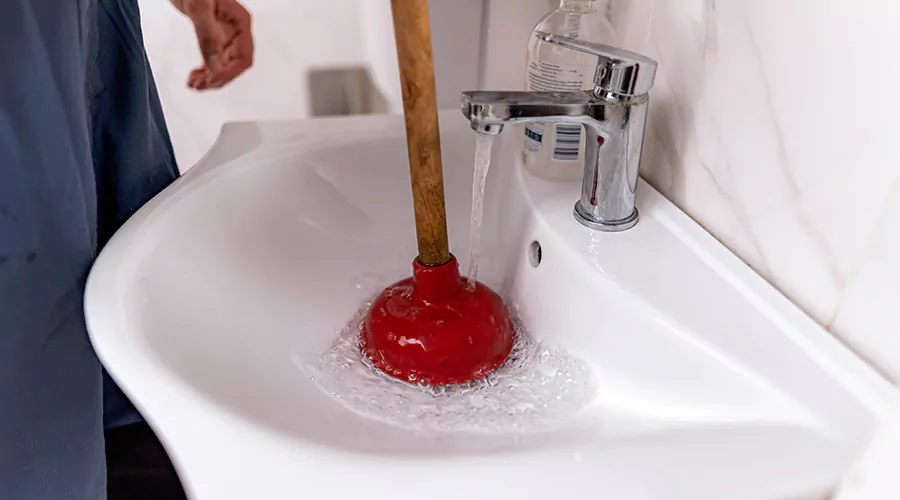
Your sink is usually clogged because hair, grease or other residue has reduced the open area inside the drain. Professional drain cleaning costs $147 to $352 in 2026 with an average near $246. The material causing the blockage often depends on whether the sink is in a kitchen or bathroom. A clogged sink often develops gradually.
The sink may continue draining for days while the available opening becomes smaller. Understanding what is building up helps prevent the same problem from returning after it has been cleared.
Why Do Bathroom and Kitchen Sinks Clog Differently?
Bathroom sinks primarily collect hair and grooming residue while kitchen sinks are more likely to collect grease and food particles. The plumbing works in a similar way but the material entering each sink changes where the blockage forms and which clearing method works best.
| Sink Type | Common Buildup | Typical First Location |
|---|---|---|
| Bathroom sink | Hair and soap residue | Pop-up stopper |
| Kitchen sink | Grease and food | Strainer or trap |
| Either sink | Small foreign objects | P-trap |
| Either sink | Deeper accumulated residue | Branch pipe |
Bathroom hair often catches on the stopper mechanism. Kitchen grease can coat a longer section of pipe and collect food over time.
Why Does Hair Clog a Sink?
Hair creates a sink clog because strands catch on drain parts instead of washing straight through. Soap residue then attaches to the hair. The resulting mass becomes larger each time more strands enter the drain until normal water flow becomes restricted.
- Bathroom sinks are especially vulnerable because pop-up stoppers have moving parts where hair can wrap around the lower stem.
- You may be able to confirm the problem by removing the stopper and inspecting it.
- The related supplied keyword clogged sink drain describes the same blockage after it begins affecting flow.
Why Does Grease Clog a Sink?
Grease can enter a kitchen sink as a liquid and then cool against the pipe wall. Food residue sticks to the coating and makes the opening progressively smaller. Current 2026 guidance identifies cooking oils and fats as a leading kitchen sink clog source.
- Hot water may carry grease farther into the drainage system.
- That does not mean the grease disappeared.
- It can cool at another point inside the pipe.
- Keeping cooking fat out of the drain is therefore more effective than trying to wash it away later.
Can the P-Trap Cause the Sink to Clog?
Yes. The P-trap is designed to hold water so sewer gas cannot move freely through the sink drain. Its curved shape can also catch hair or food. A blockage there can slow or stop one sink while other fixtures continue working normally.
A trap clog often has these signs:
- One sink is affected.
- Drainage becomes progressively slower.
- Plunging gives only temporary improvement.
- Removing the trap reveals physical debris.
- Other fixtures continue draining normally.
If the P-trap is clean but the sink stays blocked, the obstruction probably sits farther downstream.
How Does a Clogged Sink Progress?
A sink clog usually starts with a small restriction and develops into standing water as more debris collects. A completely blocked sink is the final stage rather than the first. Recognizing slower drainage early gives you more options for simple mechanical cleaning.
| Stage | Sink Behavior | Likely Condition | 2026 Cost Exposure |
|---|---|---|---|
| Early | Slight slowdown | Initial buildup | Often DIY |
| Partial | Small puddle forms | Growing clog | $0 to $50 DIY |
| Severe | Standing water | Dense obstruction | $147 to $352 |
| Wider problem | Other fixtures react | Shared drain issue | Can cost more |
Basic DIY sink unclogging can cost $0 to $50 and take around 30 to 45 minutes. Professional drain cleaning averages about $246.
What Warning Signs Tell You the Clog Is Getting Worse?
A worsening sink clog changes how the fixture handles normal water flow. The strongest warnings are longer drainage times and backups that return soon after clearing. Symptoms in other fixtures suggest that the restriction may no longer be limited to the sink itself.
- The basin takes longer to empty each week.
- Water pools during normal faucet use.
- The drain makes repeated gurgling sounds.
- The sink develops an unpleasant odor.
- Plunging works only temporarily.
- Water backs into a second sink bowl.
- The P-trap repeatedly fills with debris.
- A nearby drain starts moving slowly.
- Wastewater returns through the sink.
- The drain stops completely.
One slow sink usually points toward a local problem. Several slow fixtures justify investigation farther downstream.
Can a Sink Stopper Cause the Problem?
A sink stopper can create or worsen a bathroom clog when hair wraps around its lower section. A stopper that does not rise fully can also restrict drainage even after much of the hair has been removed. Cleaning and checking the stopper should come before deeper pipe work. Remove the stopper if the design allows it.
Then:
- Pull off visible hair.
- Clean residue from the stem.
- Check that the stopper moves through its full range.
- Look into the upper drain with a flashlight.
- Test the sink before reinstalling deeper plumbing parts.
A clean and correctly adjusted stopper eliminates one of the easiest causes to confirm.
What DIY Test Can Identify the Clog Location?
A staged drainage test can show whether the obstruction is close to the sink or deeper in the system. Start by cleaning the drain opening. Then test the sink. Inspect the P-trap only if the problem remains. This process avoids opening pipes unnecessarily.
Use this order:
- Remove the stopper or strainer.
- Clean reachable debris.
- Run a small amount of water.
- Plunge if drainage remains slow.
- Remove and inspect the P-trap.
- Test again after reassembly.
- Use a hand auger if the trap was clear.
Each step gives you information about where the clog is located.
When Should You Call a Professional?
Professional clogged drain repair can help when the sink remains blocked after stopper cleaning and P-trap inspection or when several fixtures become slow. Professional drain cleaning costs $147 to $352 in 2026. Drain snaking as a broader plumbing service can range from $95 to $500.
Consider professional diagnosis when:
- The hand auger cannot reach the clog.
- More than one fixture backs up.
- Wastewater enters another sink or tub.
- The blockage returns frequently.
- Accessible pipes are cracked.
- You cannot safely open the drain assembly.
A deeper blockage requires a different approach from a simple sink-level obstruction.
How Can You Prevent Another Sink Clog?
Prevention works best when it matches the sink. Bathroom sink maintenance should focus on hair. Kitchen sink maintenance should focus on grease and food. Every sink benefits from early cleaning when drainage begins changing.
For a bathroom sink:
- Remove hair from the stopper regularly.
- Keep grooming debris out of the drain.
- Clean residue from the upper drain.
For a kitchen sink:
- Use a food strainer.
- Dispose of grease separately.
- Keep coffee grounds out of the drain.
For either sink:
- Watch for slow drainage.
- Clean the P-trap when recurring debris appears.
- Address repeated clogging instead of treating it as normal.
Conclusion
If you are asking why is my sink clogged, start with what normally enters that particular fixture. Bathroom sinks tend to collect hair while kitchen drains develop grease and food buildup. The stopper and P-trap are common local clog points. A clean trap combined with continued backup points farther downstream. If several fixtures become slow at the same time, professional diagnosis may be appropriate. Check your drain opening this week.
Frequently Asked Questions
Why did my sink clog suddenly?
A developing obstruction can shift and close the last remaining opening. A small foreign object can also create an immediate blockage.
Why is only one sink clogged?
The obstruction is probably located in that fixture's stopper area, P-trap or branch drain.
Can hard water contribute to sink clogs?
Mineral buildup can narrow drain surfaces and make it easier for other debris to collect.
Why does my sink gurgle when it drains?
Air is moving through restricted plumbing. Gurgling in several fixtures can suggest a deeper drain problem.
Can a clogged sink cause a bad smell?
Yes. Organic material can remain wet inside the drain and produce odor as it breaks down.